


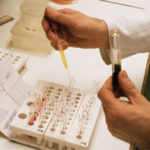
Specialists in blood bank technology perform both routine and specialized tests in blood donor centers, transfusion services, reference laboratories and research facilities.
Although medical technologists and medical laboratory technicians also perform various blood tests, the blood bank technology specialist’s training enables him or her to perform specialized tests, such as those dealing with the study of blood and its immunities (immunohematology).
Their duties include:
- Identifying blood types and antibodies
- Testing blood for viruses that might be transmitted during transfusion
- Investigating harmful responses of the body to blood transfusion
- Supervising the collection, separation, delivery and storage of blood components
- Supporting physicians and nurses in blood transfusion therapy
Individuals certified as specialists in blood banking by the American Society for Clinical Pathology are knowledgeable in all aspects of blood banking. They demonstrate a superior level of technical proficiency and problem-solving ability in such areas as:
- Testing for blood group antigens, compatibility and antibody identification
- Investigating abnormalities such as hemolytic diseases of the newborn, hemolytic anemias and adverse reactions to transfusion
- Supporting physicians in transfusion therapy for patients with coagulopathies (diseases affecting blood clotting), for example, or candidates for organ and cellular transplantation/therapy
- Performing blood collection and processing, including selecting donors, collecting blood, typing blood and molecular testing
- Performing viral marker testing to ensure patient safety
- Managing patient blood
Blood bank technology specialists are expected to be good at problem solving and attention to detail since small differences can be crucial to a diagnosis. They should also have computer skills, manual dexterity and normal color vision.
Supervision, management and/or teaching also make up a considerable part of their responsibilities.
Blood bank technology specialists serve in many roles within the transfusion medicine field such as regulatory experts, technical/procedural advisors, laboratory administrators, quality assessors and managers, educators for technical and scientific training in blood transfusion medicine and researchers in transfusion medicine. Blood bank technology specialists carry out all operations of the blood bank, from routine testing to the most advanced procedures.
Most blood bank technology specialists work as technical supervisors and laboratory managers and oversee reference laboratories. They may also be involved in research, teaching or consulting. Many blood bank technology specialists become transfusion safety officers and manage patient blood management programs in intra- and post-operative blood salvage and transfusion monitoring and organizations such as anemia clinics.
Working Conditions
Specialists in blood bank technology work in community blood centers, private hospital blood banks, university-affiliated blood banks, transfusion services and independent laboratories. They may be on call for weekend and night duty.
Academic Requirements
To become a blood bank technology specialist, you must complete a bachelor’s degree with a major in biology, microbiology or another biological or physical science and certification as a medical technologist.
After college, enroll in an accredited, one-year specialized training program or pursue a master’s degree in blood bank technology, also known as immunohematology, for 24 months. Those programs include the study of:
- Basic and advanced serological techniques
- Blood donation and product manufacturing
- Apheresis
- Viral disease testing
- Genetics
- Transfusion medicine practices
- Component therapy
- Quality systems and process control
- Human leukocyte antigen (HLA) and transplantation
- Education and research
- Management
- Blood bank administration
Blood bank technology specialists must pass a certification exam. Some states require blood bank technology specialists to be licensed.
Resources
- American Association of Blood Banks
- American Society of Clinical Pathologists
- Commission on Accreditation of Allied Health Education Programs