


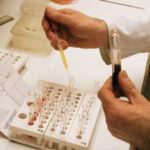
Cytotechnologists are laboratory professionals who study cells and cellular anomalies. Using a microscope, they examine slides of human cells for any indication that a cell is abnormal and/or diseased (i.e., cancerous or precancerous lesions, infectious agents or inflammatory processes). Cytotechnologists often play a crucial role in helping patients to recover from illness by identifying a disease while it is still at a treatable stage.
Cell specimens are obtained from various body sites, such as the female reproductive tract, the lung, etc., and then placed on slides using special techniques. Cytotechnologists examine the slides microscopically, mark cellular changes that indicate disease and submit a report to the pathologist for final evaluation.
Using the findings of cytotechnologists, pathologists can diagnose and treat disease — in many cases, long before it could be detected otherwise. For instance, in recent years, fine needles are being used to aspirate lesions, even those that are deeply seated in the body. This has greatly enhanced the ability to find and diagnose tumors located in previously inaccessible sites.
As new screening and identification techniques for cancer are developed, cytotechnologists will continue to play an invaluable role in the diagnosis and treatment of disease.
Working Conditions
Most cytotechnologists work in hospitals or commercial laboratories. With experience, they also may work in private industry or in supervisory, research and teaching positions. Cytotechnologists may work independently (when evaluating and reporting on normal cells) or in close collaboration with a pathologist (when examining cells for indications of disease).
Salary Range and Outlook
Employment opportunities and salaries vary in this field, depending on geographic location, experience and ability, but the demand for experienced cytotechnologists is growing and will continue to grow over the next two decades. Cytotechnologists earn an average salary of $61,235 per year while those in supervisory positions earn an average of $71,261 per year.
Academic Requirements
To become a cytotechnologist, you must hold a baccalaureate degree from an accredited college/university, and you must graduate from an accredited cytotechnology program. In general, cytotechnology programs require at least 28 credits of science, including chemistry and biology.
Although the length of each program depends significantly on its organizational structure, most cytotechnology programs involve at least one calendar year of formal instruction. The course of study will include:
- Mathematics and/or statistics
- Scientific method of inquiry
- Laboratory operations
- Basic laboratory techniques
- Cytologic procedures/technologies
- Ancillary testing and related technologies
- Screening and interpretation
- Professional development
After completing the program, graduates have the knowledge and skills to evaluate a wide variety of cytologic preparations. However, to become a certified cytotechnologist, graduates must also take a certification examination.